


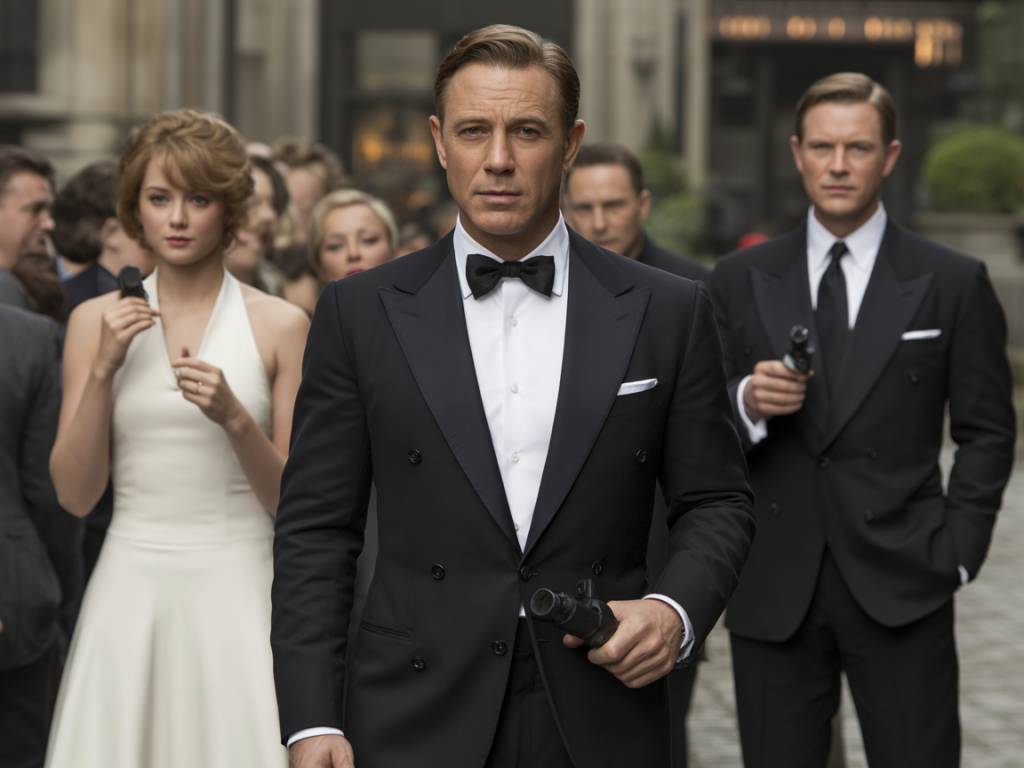
Watching the James Bond films in chronological order is more than a nostalgia exercise. It is the most efficient way to see how the character, the spy genre and even the film industry itself have changed over six decades. From Cold War paranoia to post-9/11 anxiety, from model work to digital effects, each era of 007 tells you something very specific about the moment it was produced.
This guide follows the official Eon Productions series from 1962 to 2021, focusing on what each stretch of films adds to Bond’s evolution and how to approach a full rewatch without getting lost in 25 titles.
How to watch: release order, not story order
Some franchises invite you to reshuffle the timeline. James Bond does not really work that way. The films are loosely connected, the continuity resets with each new actor, and the few recurring storylines (mainly in the Daniel Craig era) were written decades apart.
If your goal is to rediscover Bond’s evolution, release order is the most revealing because it lets you watch in parallel:
- How geopolitics shifts (Cold War to détente, late-20th-century terrorism, cyber threats, bioweapons)
- How action cinema evolves (stunt design, editing rhythm, use of visual effects)
- How the idea of masculinity moves from unshakable fantasy to something more vulnerable and self-aware
Below, the 25 official films are grouped by actor and era, with pointers on what to pay attention to if you are doing a chronological marathon.
The Sean Connery years (1962–1967, 1971): inventing the template
Sean Connery did not just play Bond first; he defined the baseline the others react to. The early 1960s entries are relatively grounded spy thrillers that rapidly escalate into larger-than-life adventures.
Release order:
- Dr. No (1962)
- From Russia with Love (1963)
- Goldfinger (1964)
- Thunderball (1965)
- You Only Live Twice (1967)
- Diamonds Are Forever (1971)
Key points for a rewatch:
- Bond as blunt instrument. In Dr. No and From Russia with Love, Connery’s Bond is closer to a working spy than a superhero. The action is smaller scale, the missions more recognisably Cold War: defectors, double agents, stolen technology.
- The formula locks in early. Goldfinger is where the famous mix settles: gadget briefing with Q, megalomaniac villain, iconic henchman, memorable theme song, pre-credits sequence that functions as a mini-movie.
- Escalation and spectacle. Thunderball pushes underwater action to the limit, using extensive location work and large-scale stunts for the time. By You Only Live Twice, the series is already building volcanic lairs and flirting with self-parody.
- First signs of fatigue. Diamonds Are Forever brings Connery back after George Lazenby’s single film (we will get to that), but the tone is broader, the plot looser, and the villain less threatening. It shows how quickly a fresh concept becomes formulaic when it works too well.
If you start your marathon here, watch how quickly the series moves from lean espionage to fantasy. Nearly every later “course correction” will be a reaction to that drift.
George Lazenby’s one-shot (1969): the road not taken
Between Connery films, Eon recast Bond with George Lazenby, an Australian model with limited acting experience, for a single film:
- On Her Majesty’s Secret Service (1969)
On a chronological watch, this entry stands out for two reasons.
- Emotional stakes. The film follows Bond as he falls in love and marries Tracy (Diana Rigg), then suffers a personal loss in the final scene. That ending, unusually sombre for the time, will echo in later films, especially Dalton’s and Craig’s eras.
- Grounded, European thriller style. There is less reliance on heavy gadgets, more emphasis on location atmosphere (Switzerland) and hand-to-hand combat. Many contemporary critics and later filmmakers cited it as one of the most faithful Fleming adaptations.
As you watch the rest of the series, you can trace how often writers and directors return to this film’s more vulnerable Bond, even when the overall tone is lighter.
Roger Moore (1973–1985): from Cold War to cartoon and back
Roger Moore inherits the role in the 1970s, a decade already saturated with real-world espionage scandals and a changing sense of what a hero should look like. His version of Bond leans into charm, comedy and big set-pieces.
Release order:
- Live and Let Die (1973)
- The Man with the Golden Gun (1974)
- The Spy Who Loved Me (1977)
- Moonraker (1979)
- For Your Eyes Only (1981)
- Octopussy (1983)
- A View to a Kill (1985)
What to look for on a chronological viewing:
- Bond versus trends. Live and Let Die borrows elements from the blaxploitation wave; The Man with the Golden Gun chases martial arts cinema and uses Thailand and Hong Kong as exotic backdrops. The franchise openly adjusts itself to whatever genre is hot.
- The big pivot to spectacle. The Spy Who Loved Me is often seen as Moore’s peak: huge sets, underwater car, the introduction of Jaws. Two years later, Moonraker takes Bond to space, directly responding to the success of Star Wars. Watching these after Connery shows how far the series has moved into science fiction territory.
- Attempts at re-grounding. After the excess of Moonraker, For Your Eyes Only consciously strips back gadgets, focusing on revenge, double agents and more realistic action. You can read it as the producers acknowledging they had gone too far.
- Age and tone. By A View to a Kill, Moore was in his late 50s. Rewatching in order, the physical gap between the stunts and the actor becomes more noticeable, and the lighter tone feels at odds with mid-1980s action cinema, where more brutal, muscular heroes were dominating.
If you find some Moore entries cartoonish, that contrast is part of the point of watching chronologically: it helps explain why the next reboot attempts to pull Bond closer to Fleming again.
Timothy Dalton (1987–1989): the darker transition
Timothy Dalton’s short run looks more and more like a bridge between Connery’s cold efficiency and Craig’s emotional intensity.
Release order:
- The Living Daylights (1987)
- Licence to Kill (1989)
Placing these immediately after Moore’s last film creates a sharp tonal break.
- Back to the books. Dalton insisted on playing Bond closer to Ian Fleming’s text: a professional, often serious agent who does not rely on one-liners. The humour is still there, but less central.
- End-of-Cold-War tension. The Living Daylights engages more directly with late-Cold-War politics: defecting Soviet generals, Afghanistan, shifting allegiances. It already senses a world order in flux.
- Personal vendetta. Licence to Kill takes Bond rogue to avenge a friend, pushing violence and moral ambiguity further than previous films. Released in the same year as Lethal Weapon 2 and Die Hard, it shows the franchise trying to compete with the rising R-rated action trend.
The Dalton era was cut short by legal disputes that delayed production. But on a continuous watch, it clearly prepares the ground for a more introspective Bond, even if the immediate follow-up goes in a different direction.
Pierce Brosnan (1995–2002): post-Cold-War reinvention
Pierce Brosnan arrives after a six-year gap with the Cold War officially over and the spy genre in need of a new enemy.
Release order:
- GoldenEye (1995)
- Tomorrow Never Dies (1997)
- The World Is Not Enough (1999)
- Die Another Day (2002)
In a chronological run, this era does three important things.
- Re-evaluating 007’s relevance. GoldenEye opens with MI6 being called a “relic of the Cold War” and introduces Judi Dench as a new M who openly questions Bond’s methods. The villain is a former 00 agent, another sign the series is turning inward and interrogating its own mythology.
- New threats, same fantasies. The enemies shift from superpowers to media tycoons (Tomorrow Never Dies), oil and nuclear politics (The World Is Not Enough), and North Korean rogue operations with gene therapy and solar weapons (Die Another Day). Yet structurally, these stories still follow the established formula.
- Digital age and excess. By Die Another Day, the visual effects and gadgets (notably the invisible car) push the franchise toward self-parody again. Released the same year as The Bourne Identity, it looks suddenly old-fashioned in terms of grounded action, which matters if you watch it in sequence.
The Brosnan era is commercially successful and often entertaining, but its escalation into CG-heavy spectacle directly triggers the next hard reboot.
Daniel Craig (2006–2021): the serialized, wounded agent
Daniel Craig’s tenure reboots Bond’s story from the beginning and, for the first time in the series, follows a semi-continuous character arc across multiple films.
Release order:
- Casino Royale (2006)
- Quantum of Solace (2008)
- Skyfall (2012)
- Spectre (2015)
- No Time to Die (2021)
Placed after Die Another Day, the shift is immediately visible.
- Origin story and physicality. Casino Royale resets Bond to his first kill as a 00. The parkour chase, the more brutal fistfights and the poker sequences emphasise physical risk and psychological stakes rather than gadgets. The relationship with Vesper Lynd deliberately mirrors the emotional core of On Her Majesty’s Secret Service.
- Trauma and continuity. Quantum of Solace directly follows the events of Casino Royale, exploring grief and revenge. Even if the film is uneven, it marks a shift from standalone adventures to a longer arc about betrayal, trust and institutional corruption.
- Legacy and introspection. Skyfall is a 50th-anniversary film that turns inward: the villain is a former MI6 agent, the plot revolves around leaked agent identities, and the story questions whether Bond and MI6 are obsolete in a cyber age. The film also rebuilds classic elements (Q, Moneypenny, the Aston Martin) within this more self-aware framework.
- Retrofitting mythology. Spectre and No Time to Die attempt to tie the previous Craig films into a single overarching threat. Whether you find that convincing or not, watching in order highlights how modern franchises now operate: world-building, emotional arcs, and a definitive endpoint for the character.
- A finite Bond. By the end of No Time to Die, for the first time in the series, this version of Bond’s story is closed. That structural choice is only fully meaningful when you have seen the previous decades of endless resets and recasts.
Viewed as the final stretch of a 60-year chronology, the Craig era functions both as a reaction to everything that came before and as a comment on it.
Practical viewing paths: how deep do you want to go?
Twenty-five films can be a lot to commit to. Depending on your time and interest, here are three chronological paths that still let you see Bond’s evolution.
- The “era sampler” (8 films)
- Dr. No – template creation
- Goldfinger – formula locked
- On Her Majesty’s Secret Service – emotional outlier
- The Spy Who Loved Me – peak Moore spectacle
- Licence to Kill – darker transition
- GoldenEye – post-Cold-War reinvention
- Casino Royale – grounded reboot
- Skyfall – legacy and introspection
- The “politics and paranoia” line (6 films)
- From Russia with Love – Cold War spycraft
- The Living Daylights – late-Cold-War realignment
- GoldenEye – aftermath of the Soviet collapse
- Tomorrow Never Dies – media power and manufactured crises
- Skyfall – security vs. transparency debate
- No Time to Die – bioweapons and ethics of control
- The “Bond as human being” track (5 films)
- On Her Majesty’s Secret Service – love and loss
- Licence to Kill – personal revenge
- Casino Royale – betrayal and origin
- Skyfall – past trauma, parental figures
- No Time to Die – ageing, sacrifice and legacy
All three paths keep the release order intact but reduce volume, allowing you to focus on one aspect of the character’s evolution.
Why this chronology still matters
Spending time with 007 in release order is not just about ranking films or debating favourite Bonds. It is a fairly accurate X-ray of how mainstream cinema has navigated six decades of technology, geopolitics and audience expectations.
- Each new actor marks a reaction against the previous tone: Connery’s coolness, Moore’s comedy, Dalton’s seriousness, Brosnan’s polish, Craig’s bruised realism.
- The series mirrors shifting fears: nuclear annihilation, espionage scares, drug cartels, media manipulation, cyber attacks, and weaponised biology.
- The films track the evolution of action craft itself, from practical stunts and optical effects to CGI-heavy set-pieces and back toward more grounded choreography.
- Across all this, the idea of who Bond is — unshakeable fantasy or flawed individual — keeps oscillating, and that tension is easiest to appreciate when you watch the saga as a continuous line rather than isolated nostalgia pieces.
Start with one era or go all the way from Dr. No to No Time to Die; either way, the chronological route gives you a much clearer view of why this character has survived, changed and, occasionally, had to be rebuilt from scratch.