


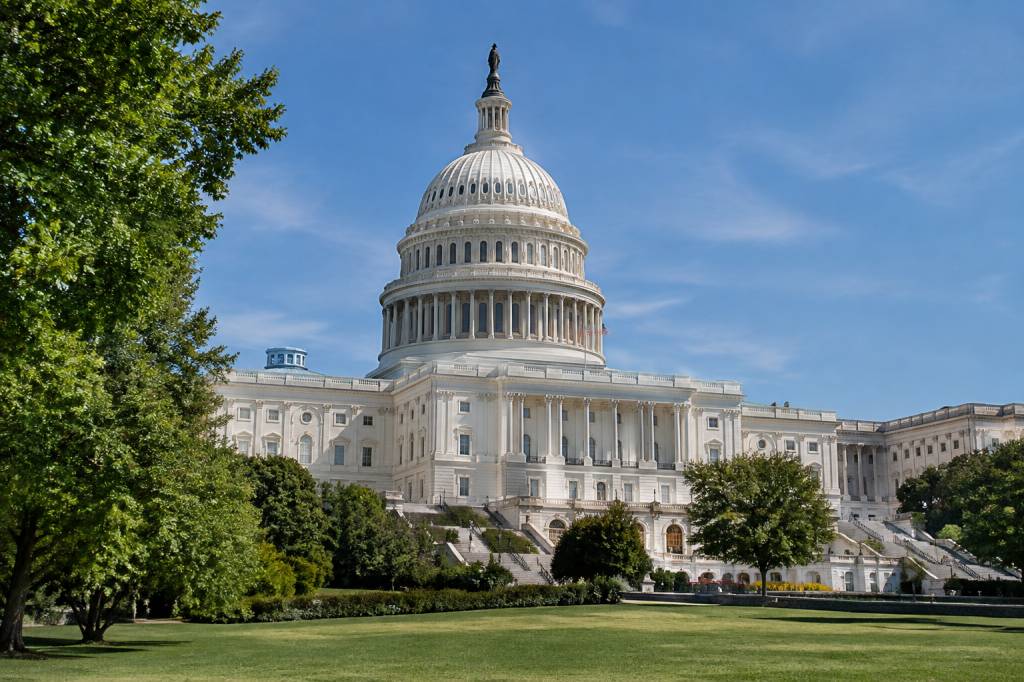
America’s news cycle moves quickly, but the forces shaping it are easier to identify. Politics, household costs, immigration, foreign conflicts, technology and extreme weather continue to dominate the national conversation. The challenge for readers is separating a verified development from a viral claim, a policy announcement from a political promise, and a temporary market reaction from a lasting trend.
This one-minute briefing is built as a practical map of the issues driving attention across the United States. It does not treat every loud headline as equally important. Instead, it focuses on the stories most likely to affect government decisions, family budgets, public debate and the country’s international position.
Washington Remains the Main News Engine
Federal politics continues to shape nearly every major American news agenda. Congress, the White House and the courts are locked in disputes over spending, executive authority, immigration, regulation and the limits of presidential power.
The immediate political question is often procedural: Will lawmakers approve a budget? Will a government shutdown be avoided? Can the Senate move a bill forward? These details may appear technical, but they have practical consequences. A budget delay can affect federal workers, contractors and public services. A court ruling can alter how agencies enforce regulations. A congressional investigation can influence the next legislative fight even when it produces no immediate law.
Readers should watch three indicators:
- Whether lawmakers reach bipartisan agreements or rely on temporary funding measures.
- Whether major policy disputes move from Congress into the courts.
- Whether campaign messaging is being converted into specific legislation or remains largely rhetorical.
The political temperature is high, but volume is not the same as impact. The most important development may be a short committee vote or a legal filing rather than a dramatic speech delivered in front of television cameras.
The Economy Is Being Measured at the Kitchen Table
Economic coverage remains focused on inflation, interest rates, employment and consumer confidence. Official data can suggest that inflation is slowing, yet households may still feel pressure because prices remain higher than they were several years ago. A slower rate of increase does not mean a return to earlier prices. That distinction is frequently lost in political debate.
Housing is one of the clearest examples. Mortgage rates, limited inventory and high construction costs continue to make home ownership difficult in many parts of the country. Renters face a different pressure: even where rent growth has cooled, monthly housing costs can consume a large share of household income.
Food, insurance and utilities are also important indicators. A family does not experience the economy through a national average. It experiences the economy through a grocery receipt, a car insurance renewal, a medical bill and the amount left after rent.
For a clearer picture, readers should compare several measures rather than relying on one headline:
- Consumer price data, which tracks changes in the cost of goods and services.
- Wage growth, which shows whether pay is keeping pace with those costs.
- Unemployment and job creation, which indicate the strength of the labor market.
- Consumer spending, which reveals whether households are still willing to buy.
The central question is straightforward: Are incomes rising faster than essential expenses? The answer varies by region, profession and household size, which is why national statistics require local context.
Interest Rates Still Influence Everyday Decisions
Federal Reserve policy remains one of the most consequential economic stories in America. When interest rates are high, borrowing becomes more expensive. That affects mortgages, credit cards, auto loans, business investment and government debt costs.
When rates eventually move lower, the effect is not immediate or uniform. Mortgage rates may respond before some consumer loans. Banks may tighten lending standards. Businesses may remain cautious if they expect weak demand. In other words, one central-bank announcement does not instantly rewrite the economy.
Investors usually focus on inflation reports and employment figures because those data points influence the Federal Reserve’s decisions. A stronger-than-expected jobs report can reduce pressure for rate cuts. A weaker report may increase concern about a slowdown. Markets often react within minutes, sometimes before economists have agreed on what the figures mean. That is one reason the first market reaction should not be treated as the final verdict.
Immigration Remains a Policy and Human Story
Immigration continues to occupy a central place in American politics. The debate covers border enforcement, asylum processing, deportation policy, work permits, state-level responses and the future of long-term undocumented residents.
The political arguments are familiar, but the policy details matter. Changes to asylum rules can influence how quickly claims are processed. Additional detention or court capacity can affect backlogs. State and local governments may face costs related to housing, education, health services and transportation. Employers in agriculture, construction, hospitality and healthcare also monitor immigration policy because labor availability affects operations.
Any serious report on the border should distinguish between several separate issues:
- The number of encounters recorded by border authorities.
- The number of people released while awaiting proceedings.
- The volume of asylum applications and the size of the court backlog.
- The number of removals or returns.
- The legal status of policy changes challenged in court.
These categories are connected, but they are not interchangeable. A single statistic cannot describe the entire immigration system. Readers should be cautious when a political message uses one number as proof of a much broader claim.
Foreign Conflicts Continue to Shape U.S. Decisions
America’s role in international conflicts remains a major source of debate. Military aid, diplomatic pressure, sanctions, weapons transfers and humanitarian assistance all carry domestic consequences, including effects on the federal budget and U.S. relationships with allies.
Supporters of overseas engagement argue that helping partners deter aggression protects American interests and strengthens international alliances. Critics question the cost, the risk of escalation and the lack of clear end goals. Both sides focus on different definitions of national interest.
When assessing a foreign-policy headline, readers should ask four questions:
- What action has actually been announced?
- Who is responsible for carrying it out?
- What limits or conditions apply?
- What would success look like, and on what timeline?
Announcements often receive more attention than implementation. A new package of assistance, for example, may require congressional approval, military planning and months of delivery. Diplomatic statements may signal a change in position without producing an immediate change on the ground.
The same principle applies to alliances. Public disagreements between the United States and its partners can appear dramatic, but the more significant question is whether intelligence sharing, trade, military coordination or formal commitments are changing.
Artificial Intelligence Moves from Experiment to Regulation
Artificial intelligence is no longer only a technology story. It is now a workplace, education, copyright, national security and consumer-protection story.
Companies are integrating AI tools into customer service, software development, advertising, finance and media production. Schools and universities are debating how students should use generative tools. Employers are asking whether AI will replace tasks, reduce costs or create new forms of work. Regulators are examining privacy, discrimination, transparency and the use of copyrighted material in training data.
The most practical issue is not whether AI will transform society. That question is already settled. The immediate issue is who carries the risk when an automated system makes a mistake.
Readers should look for evidence in three areas:
- Whether a company discloses when customers are interacting with an automated system.
- Whether human review is available for high-impact decisions.
- Whether new laws or court rulings establish responsibility for inaccurate or harmful outputs.
AI headlines often use impressive demonstrations as evidence of capability. A demonstration is not the same as reliable performance in a real workplace. Accuracy, security, cost and accountability remain the practical tests.
Extreme Weather Keeps Local Stories on the National Map
Floods, wildfires, hurricanes, heat waves and severe storms continue to influence national coverage. These events are local first, but their effects spread through insurance markets, food prices, transportation systems and federal disaster spending.
Insurance is becoming one of the clearest economic consequences. In some high-risk areas, premiums have increased sharply or coverage has become difficult to obtain. That affects property values, mortgage approvals and decisions about where people can afford to live.
Weather reporting should also distinguish between an individual event and long-term climate patterns. A single storm cannot prove or disprove a broad climate trend. Scientists instead examine frequency, intensity, rainfall totals, temperature records and changes over time.
For residents, the most useful information is often practical:
- Local emergency alerts and evacuation instructions.
- Power outage information and cooling or warming-center locations.
- Road closures, school cancellations and public transportation changes.
- Federal and state assistance deadlines after a declared disaster.
In a fast-moving emergency, official local sources are more valuable than social-media posts that may be outdated within minutes.
Public Health Reporting Requires Precision
Health stories remain important, particularly when they involve respiratory illnesses, vaccination campaigns, drug shortages, food safety or access to medical care. The strongest reports identify the affected population, the level of risk and the action recommended by public-health authorities.
Readers should be wary of headlines that turn a preliminary study into a final medical conclusion. Research findings can be limited by sample size, methodology or the population examined. A result observed in a laboratory or a small group does not automatically apply to every patient.
The cost of healthcare is also a continuing national concern. Prescription prices, insurance deductibles, emergency-room bills and shortages of medical professionals all influence household decisions. Policy changes may take time to reach patients, especially when insurers, pharmacies, hospitals and government agencies must update their systems.
How to Read Today’s Headlines More Clearly
A reliable news habit does not require reading every story. It requires asking better questions.
- Is the information confirmed by a primary source?
- Does the report distinguish facts from forecasts and opinions?
- Is the headline describing a proposal, a decision or an implemented policy?
- What is the timeline?
- Who benefits, who pays and who has authority?
- What information is still missing?
For major national stories, compare reporting from established outlets with primary documents such as government releases, court opinions, economic data and official emergency notices. A viral clip may reveal what someone said, but it rarely explains what happened before or what comes next.
The Essential Takeaways
America’s most important headlines are connected. Federal political decisions influence the economy. Economic pressure shapes immigration debates and elections. International conflicts affect budgets and alliances. Technology policy is becoming workplace policy. Extreme weather is becoming an insurance and infrastructure story.
- Watch policy actions, not only political statements.
- Measure the economy through both national data and household costs.
- Treat immigration statistics as separate categories rather than one simple figure.
- Follow implementation, legal challenges and local effects after every major announcement.
The news may change by the hour, but these questions provide a stable way to understand it. In a crowded information cycle, context remains the most useful headline of all.