


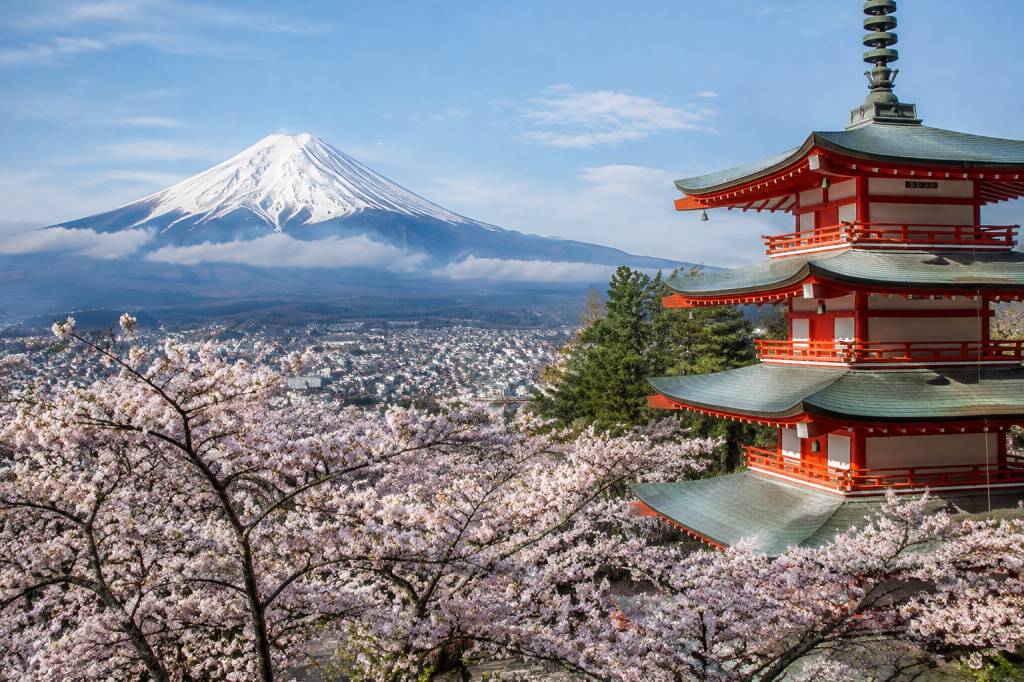
Japan is often introduced through familiar images: Tokyo’s neon streets, Kyoto’s temples, bullet trains and carefully prepared sushi. Those images are real, but they do not explain how varied the country is—or how much everyday life can differ from a visitor’s expectations. Here are ten details that offer a more useful picture, from geography and transport to food, public services and social change.
Japan has more islands than many people expect
Japan is not a single continuous island chain with a simple map. It is an archipelago stretching from the subarctic north to subtropical islands in the south. In 2023, the Geospatial Information Authority of Japan counted 14,125 islands using updated digital mapping. The figure is much higher than the 6,852 commonly cited for decades, largely because improved mapping identified and counted smaller islands more precisely.
The four largest islands—Honshu, Hokkaido, Kyushu and Shikoku—hold most of the population and are linked by bridges, tunnels and ferry routes. But the smaller islands matter too. Okinawa’s climate and history differ markedly from those of northern Honshu, while remote communities in the Seto Inland Sea have their own pace and transport challenges.
That scale changes how a trip should be planned. “Japan” is not one compact sightseeing zone. A journey between Tokyo and the far south can involve a flight or a long sequence of trains, and island destinations may require ferry schedules to be built into the itinerary.
Its seasons are more varied than the postcard version
Cherry blossoms are a celebrated part of spring, but Japan does not experience one nationwide blossom moment. The flowering front generally moves from warmer regions toward the north, and local conditions shift the timing each year. A tree in Kyushu may bloom weeks before one in Hokkaido. The Japan Meteorological Agency publishes forecasts, but exact dates remain dependent on weather.
The climate also changes sharply across the country. Hokkaido has cold, snowy winters; Tokyo has humid summers and comparatively mild winters; Okinawa is subtropical. The rainy season, known as tsuyu, usually affects much of the country in early summer, though its timing and local impact vary. Typhoons are another seasonal factor, particularly from summer into autumn.
For visitors, this means packing for a region rather than relying on a single national forecast. It also explains why “best time to visit Japan” has no universal answer: spring blossoms, summer festivals, autumn foliage and winter sports each suit different destinations and travel styles.
Convenience stores do far more than sell snacks
Japan’s convenience stores, or konbini, are a practical part of daily life. Chains such as 7-Eleven, FamilyMart and Lawson sell ready-to-eat meals, drinks and household basics, but many branches also provide services such as bill payment, parcel handling and printing. Some have ATMs, although foreign-card compatibility and fees can vary.
The food selection is a particular surprise. A small store may offer rice balls, sandwiches, salads, hot snacks, desserts and packaged meals, with stock changing through the day. Quality and choice vary by branch, but these shops can be useful when restaurants are closed or a traveller needs a quick meal near a station.
They are not a replacement for every local business, and the familiar chain experience can make different cities feel more similar than they are. Still, a konbini is often a reliable first stop after arriving: buy a transit drink, check the weather, pick up breakfast and find out whether the nearest ATM accepts your card.
Vending machines are common, but not on every corner
Japan has a large vending-machine presence, especially in urban areas, train stations and busy roadside locations. Machines commonly sell bottled water, tea, coffee and soft drinks. Some offer hot drinks in colder months, and a smaller number sell items such as snacks or regional products.
The machines are convenient, but the popular image of one on every street can be misleading. Their density varies by neighbourhood, and they are less useful when a traveller needs a full meal or wants to avoid single-use packaging. Prices also differ: a drink at a station or tourist site may cost more than one from a supermarket or discount shop.
Japan’s waste-sorting rules are another practical detail. Public bins can be surprisingly hard to find in some areas, so visitors may need to carry packaging until they reach a station, shop or accommodation with the right disposal options. Convenience does not always mean an easy place to throw something away.
Cash still matters, even in a highly connected country
Contactless payments and mobile wallets are widely used in many settings, especially in larger cities. But Japan is not uniformly cashless. Smaller restaurants, local shops, rural businesses and some ticket machines may still prefer or require cash. Payment options can differ even between businesses on the same street.
Public transport is also not one single payment system. Many cities accept rechargeable IC cards, and some cards work across multiple regions, but coverage and rules are not identical everywhere. A regional rail pass, a local bus and a small rural ferry may each have different ticketing arrangements.
A sensible approach is to carry a modest amount of yen while using cards where accepted. Check whether an IC card is useful for the route you plan to take, and keep enough cash for a meal or a short taxi ride. It is a small precaution that prevents a minor payment issue from becoming an unnecessary travel problem.
Train punctuality has limits—and the network has rules
Japan’s railways are known for frequent service and strong punctuality, particularly on major routes. The Shinkansen, or bullet train, links major cities at high speed, while urban rail networks can make car-free travel practical. But the system is not immune to heavy rain, snow, earthquakes, maintenance work or other disruptions.
When a delay occurs, operators may issue delay certificates, but a certificate does not make every connection or reservation automatically transferable. Passengers should check official railway information and allow extra time for airport transfers or long-distance connections. In bad weather, a timetable is a plan, not a guarantee.
There are also etiquette and logistics to learn. Platform markings show where doors will stop; boarding lines help keep movement orderly; and rush-hour trains in major cities can be extremely crowded. On some services, luggage space is limited, so large suitcases may need advance planning or a reservation. The train system is efficient, but it rewards preparation.
Japan’s ageing population shapes everyday life
Japan has one of the world’s oldest populations. According to the Statistics Bureau of Japan, people aged 65 and over made up about 29 percent of the population in 2023. The country’s population has also been declining, with effects that are visible beyond demographic charts.
Some rural towns have fewer residents, fewer workers and reduced access to services. In cities, older people are a common presence in public life, while businesses and government face pressure to adapt workplaces, healthcare and transport. The impact is not identical across the country: a growing city district and a shrinking mountain village can experience very different realities.
For visitors, the change may be visible in accessible station facilities, community services or the age profile of a small-town street. It is also a reminder that Japan’s image as a futuristic society can obscure ordinary challenges. Advanced technology does not eliminate the practical consequences of a smaller, older workforce.
Disaster preparedness is built into public life
Japan sits along the Pacific “Ring of Fire,” where tectonic activity creates earthquakes and volcanic hazards. The country also faces tsunamis, typhoons, floods and landslides. These risks have encouraged extensive monitoring and public preparedness, although no system can remove danger altogether.
Earthquake alerts may arrive on phones, and public buildings often display evacuation information. Local governments publish hazard maps showing risks such as flooding or tsunami exposure. Hotels and stations may post emergency guidance, but instructions can differ by location and hazard.
Travellers can take simple steps before an emergency happens:
-
Check the evacuation information for your accommodation and nearest station.
-
Keep your phone charged and enable relevant emergency alerts where possible.
-
Follow instructions from local authorities rather than relying on an old online post.
This preparedness is not a reason to avoid travel. It is a reason to know where you are and what to do if conditions change.
Japanese food is much broader than sushi and ramen
Sushi and ramen are internationally familiar, but they are only two parts of a varied food culture. Regional cooking reflects local ingredients, climate and history. Hokkaido is known for seafood and dairy products; Osaka has a strong street-food tradition; Okinawan cuisine includes dishes and ingredients shaped by the islands’ distinct history and subtropical environment.
Even everyday meals can surprise visitors. A set meal may include rice, soup, pickles and several small dishes. Convenience-store food can be useful, but it is worth trying a local bakery, market or neighbourhood restaurant to see what a place eats beyond its best-known exports.
Dietary needs require planning. Vegetarian, vegan and allergy-friendly options are more available in major tourist centres than in some smaller towns, but ingredients such as fish stock can appear in dishes that look vegetable-based. Carrying a clearly written explanation in Japanese can help, though it cannot guarantee that every kitchen can accommodate a request.
“Japan” contains distinct regional identities
Visitors often move between Tokyo, Kyoto and Osaka and come away with a strong impression of those cities. But the country’s identity is not limited to its best-known urban corridor. Regional dialects, food, festivals and local histories vary, and the differences can be substantial.
Okinawa, for example, was once the centre of the Ryukyu Kingdom and has a history distinct from that of mainland Japan. Hokkaido’s modern development followed a different path from that of many older regions. In the Seto Inland Sea, island communities face practical questions about transport and population that are unlike those of central Tokyo.
Adding one less-visited region can change the shape of a trip. It may mean a slower pace, fewer English-language services or extra transport planning, but it can also show how incomplete a city-only picture is. Japan is highly connected, yet local circumstances still matter.
Four useful takeaways
-
Plan by region: climate, travel time and local transport vary significantly.
-
Use convenience stores for practical needs, but carry cash for businesses that do not take cards.
-
Check current railway, weather and emergency information rather than assuming services will run exactly as planned.
-
Look beyond the famous cities and dishes to understand the country’s regional variety.
Japan can feel remarkably orderly and unexpectedly complicated at the same time. The best preparation is not memorising a list of rules; it is understanding that the country’s geography, changing population and regional differences shape ordinary experiences as much as its famous landmarks do.