


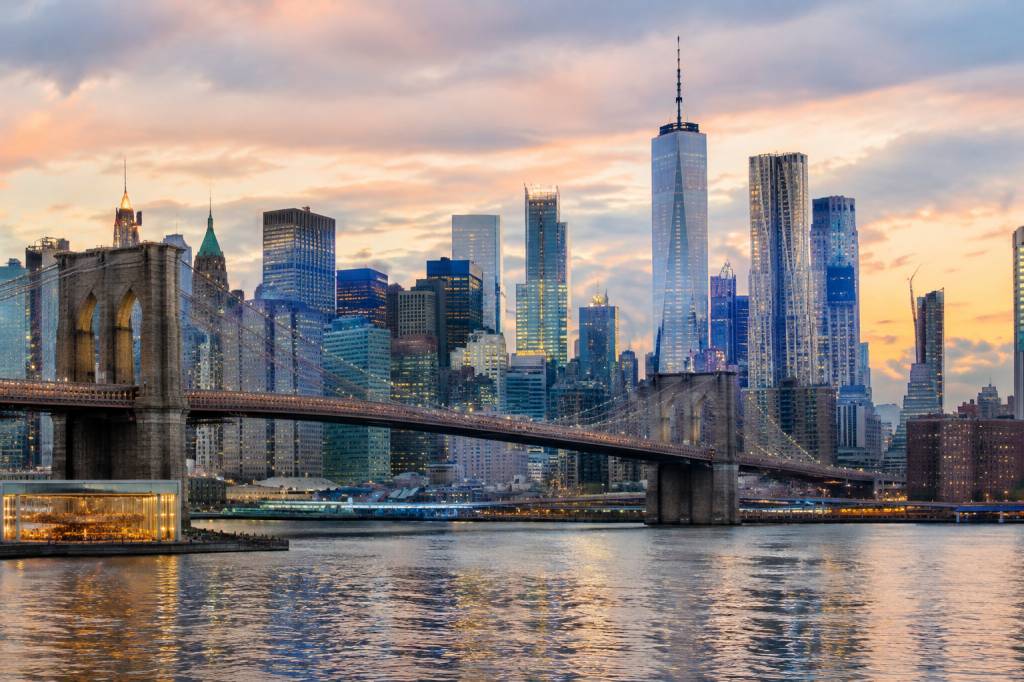
American cities are often described through streets, skylines and neighborhoods. But the more revealing map is built from individual structures: a courthouse where citizenship was defined, a factory that reorganized labor, a stadium that created a shared civic ritual, or a modest house that became a symbol of political change.
Across the United States, roughly 1,500 buildings offer a particularly useful way to read the country’s cultural and urban history. They do not all look alike, serve the same purpose or belong to the same architectural tradition. Some are internationally recognized landmarks. Others are ordinary buildings whose importance comes from what happened inside them.
Together, they show how American identity was constructed through institutions, migration, technology, commerce, entertainment and protest. They also reveal a less comfortable truth: the growth of many cities depended on displacement, segregation, exploitative labor and unequal access to public space.
A national history told through buildings
Buildings preserve more than architectural styles. They record decisions. A city hall reflects how local government operates. A railroad station reveals patterns of movement and economic power. A school can document both public investment and racial exclusion. A shopping center can show how consumer habits changed the geography of daily life.
This is why a list of 1,500 significant buildings should not be treated as a simple catalog of beautiful facades. It is better understood as a cultural and urban index. The buildings help answer practical questions: Who had access? Who paid for the project? Which industries benefited? Which communities were displaced? What did the structure make possible?
The answer often extends far beyond the property line. The construction of a skyscraper can reshape a transportation network. A public library can alter literacy and civic participation. A movie palace can turn entertainment into a mass experience. A housing project can influence an entire neighborhood, for better or worse.
Indigenous foundations and colonial layers
Any serious account of American buildings must begin before the United States existed. Indigenous communities developed sophisticated settlements, ceremonial spaces and infrastructure across North America. The cliff dwellings at Mesa Verde, in present-day Colorado, demonstrate advanced planning adapted to a demanding landscape. Cahokia, near present-day St. Louis, was a major urban center long before European colonization.
These places challenge the outdated idea that American urban history began with European streets and colonial capitals. They show that large-scale settlement, trade and civic organization already existed across the continent.
Colonial structures add another layer. The surviving buildings of Williamsburg, Virginia, the meetinghouses of New England and the Spanish colonial architecture of Santa Fe, New Mexico, reflect different political systems, religious practices and relationships with the land. They also record the violence and unequal power that accompanied colonization.
The Alamo in San Antonio illustrates how architecture can become a national symbol whose meaning changes over time. It was a mission, a military site and later a central object in competing interpretations of Texas history. The building remains important not because its story is simple, but because it is contested.
Government buildings and the idea of citizenship
Courthouses, capitols and federal buildings made the new republic visible. Washington, D.C., became a planned expression of national power, with the U.S. Capitol, the White House and the Supreme Court forming a symbolic center of government.
The Capitol is more than a familiar dome. Its construction involved enslaved labor, immigrant workers and changing architectural ambitions. The building expanded repeatedly as the country grew, turning its physical form into a record of political development.
State capitols tell a more local story. The Iowa State Capitol in Des Moines, the Texas State Capitol in Austin and the Nebraska State Capitol in Lincoln each use architecture to present a different image of public authority. Their scale and materials communicate confidence, stability and, at times, a desire to compete with other states.
County courthouses are equally important. They sit at the center of many small American communities, handling elections, property records, trials and public administration. Their presence explains why the courthouse square remains a defining feature of towns across the Midwest and South.
- Capitols: national and state symbols of political authority.
- Courthouses: local centers for law, property and civic administration.
- City halls: buildings that reflect the growth and ambitions of urban government.
- Post offices: everyday infrastructure that connected distant communities.
Industrial buildings that remade the working city
The Industrial Revolution transformed American cities more dramatically than almost any architectural movement. Factories attracted workers, encouraged immigration and created new neighborhoods. They also produced dangerous conditions, pollution and deep class divisions.
Lowell, Massachusetts, provides one of the clearest examples. Its textile mills and canals created an integrated industrial landscape in the 19th century. The system depended heavily on young women workers, immigrant labor and strict company rules. Today, the preserved mills form part of Lowell National Historical Park, allowing visitors to study both technological innovation and labor history.
The Pullman neighborhood in Chicago presents a more complicated model. Built by the Pullman Company for its workers, it offered planned housing and services but maintained tight control over residents. The Pullman labor strike of 1894 exposed the limits of company paternalism and became a major episode in American labor history.
In Detroit, factories such as Ford’s Highland Park plant helped make the moving assembly line a defining feature of modern production. The Model T did not merely change transportation. It altered commuting, suburban development, retail and the physical scale of American life.
Industrial buildings also helped create environmental problems that cities are still addressing. Former steel mills, warehouses and power plants now face difficult questions about cleanup, preservation and redevelopment. Should they be demolished, converted into cultural spaces or kept as evidence of a vanished economy? The answer depends on cost, safety and historical value—not nostalgia alone.
Skyscrapers and the vertical city
The American skyscraper emerged from a combination of structural steel, elevators, electric lighting and expensive urban land. Chicago and New York became laboratories for vertical development.
The Home Insurance Building in Chicago, completed in 1885, is often associated with the early development of steel-frame construction. Although the building no longer survives, its design helped establish a method that allowed walls to become lighter while structures grew taller.
New York’s Empire State Building remains the most recognizable example of the skyscraper as civic symbol. Completed in 1931 during the Great Depression, it demonstrated that large-scale construction could continue during severe economic crisis. Its observation deck also turned commercial architecture into a tourist attraction.
The Chrysler Building, completed in 1930, used stainless steel and a highly distinctive crown to compete for attention in the Manhattan skyline. It shows that skyscrapers are not only practical machines for offices. They are also advertisements, corporate statements and instruments of prestige.
Chicago’s Tribune Tower, the Woolworth Building and the Seagram Building each represent a different approach to corporate identity. Together, they show how American business architecture moved from historic ornament toward modernist simplicity, while never abandoning the desire to dominate the skyline.
Housing, segregation and the geography of inequality
Housing may be the most consequential category in the entire building story. Where people live affects education, transportation, health, employment and political representation.
New York’s tenement buildings housed millions of immigrants but often lacked adequate light, ventilation and sanitation. Reform campaigns eventually led to new building codes and public health regulations. The changes were important, but they also illustrate a recurring pattern: reform often arrived after preventable harm had become impossible to ignore.
Public housing projects were created to provide affordable homes, yet many were underfunded and isolated from economic opportunity. The Pruitt-Igoe complex in St. Louis became a widely cited example of failed public housing, although historians have emphasized that its problems were linked to segregation, disinvestment, maintenance failures and broader housing policy—not architecture alone.
Levittown, built in several states after World War II, helped popularize mass-produced suburban housing. It offered affordable homeownership to many white families while excluding Black families through discriminatory policies and practices. Its legacy includes the expansion of the automobile-dependent suburb and the long-term racial wealth gap tied to housing access.
Buildings associated with civil rights make these patterns visible. The Lorraine Motel in Memphis, where Martin Luther King Jr. was assassinated in 1968, is now part of the National Civil Rights Museum. The building preserves a specific place and moment while connecting them to voting rights, labor, segregation and organized protest.
Schools, libraries and public knowledge
Schools and libraries transformed American culture by making knowledge more accessible. The Carnegie library network, funded by Andrew Carnegie’s philanthropy, placed substantial public reading rooms in communities across the country. More than 2,500 Carnegie libraries were built in the United States, and many remain active or have been adapted for new uses.
These libraries were not neutral spaces in every period. Access could be restricted by race, gender or local policy. Yet the building type established a powerful civic principle: education and information should be available outside the home and workplace.
The campus buildings of historically Black colleges and universities carry particular importance. Howard University in Washington, D.C., Fisk University in Nashville and Tuskegee University in Alabama developed educational spaces under conditions of segregation and limited funding. Their buildings supported professional training, political organizing and cultural production.
School buildings also became central sites of legal change. In Brown v. Board of Education, the U.S. Supreme Court ruled in 1954 that racial segregation in public schools was unconstitutional. The Monroe Elementary School in Topeka, Kansas, one of the schools involved in the case, is now a national historic site.
Entertainment buildings and shared experiences
American culture was also built in places designed for leisure. Theaters, arenas, amusement parks and recording studios turned entertainment into a mass industry.
Theaters such as Radio City Music Hall in New York and the Fox Theatre in Detroit were designed to make a night at the movies feel like a major event. Their grand interiors, large seating capacities and elaborate programs reflected the economic power of Hollywood and the popularity of cinema before television became dominant.
Wrigley Field in Chicago, Fenway Park in Boston and Yankee Stadium in New York demonstrate how sports buildings become repositories of memory. Their importance is not limited to seating capacity or architectural form. They host rituals repeated over generations: opening day, championship celebrations, family outings and local rivalries.
Disneyland, opened in Anaheim in 1955, changed the design and economics of themed entertainment. It organized rides, restaurants, retail and storytelling into a controlled environment that could be replicated and expanded. Theme parks remain powerful examples of architecture serving as narrative infrastructure.
Modernism, technology and changing ideas of public space
Modernist buildings rejected much historic ornament in favor of functional planning, new materials and open space. The Seagram Building in New York, designed by Ludwig Mies van der Rohe and Philip Johnson, placed corporate modernism on a carefully designed plaza. Its influence extended far beyond Manhattan, shaping office development around the world.
Frank Lloyd Wright’s Fallingwater in Pennsylvania demonstrated a different approach. The house integrates terraces, stone and water into a composition that appears to grow from its site. Its success depends not only on visual drama but also on a precise relationship between structure and landscape.
Eero Saarinen’s TWA Flight Center at New York’s John F. Kennedy International Airport transformed air travel into a futuristic public experience. Its sweeping concrete forms suggested speed and movement, even though passengers still had to navigate the practical frustrations of airports.
Contemporary buildings continue to test the limits of public architecture. The Walt Disney Concert Hall in Los Angeles, the High Line’s surrounding redevelopment in Manhattan and the National Museum of African American History and Culture in Washington show how design can shape tourism, investment and civic identity. They also raise questions about cost, accessibility and whether cultural buildings benefit existing residents or accelerate displacement.
How to read the 1,500-building landscape
A useful survey should examine buildings through several lenses rather than ranking them only by fame.
- Function: What did the building enable—government, worship, housing, production, education or entertainment?
- Users: Who could enter, work, live or gather there?
- Labor: Who designed and constructed it, and under what conditions?
- Urban effect: Did it create jobs, attract transit, displace residents or change land values?
- Afterlife: Is it still serving its original purpose, or has it been preserved, adapted or abandoned?
This method also prevents a common mistake: treating preservation as proof that a building’s history is entirely positive. A landmark can represent innovation and injustice at the same time. The most informative sites are often those that force both facts into the same frame.
Why these buildings still matter
The 1,500 buildings that shaped American culture and cities are not frozen pieces of the past. They continue to influence how people travel, work, worship, learn and spend money. Their designs affect energy use and accessibility. Their locations influence property values and neighborhood investment. Their stories shape school lessons, museum exhibitions and political debates.
For readers, the practical lesson is simple: look beyond the famous facade. Ask what systems surround the building, who benefits from its presence and what historical evidence it preserves. A small courthouse, factory, church or apartment block may explain a city more clearly than its most photographed monument.
The key points are straightforward:
- Buildings are records of political decisions, economic systems and cultural change.
- American urban history includes Indigenous, colonial, industrial, suburban and modern layers.
- Architecture can expand opportunity while also reinforcing segregation and inequality.
- The best way to understand 1,500 significant buildings is to connect design with people, labor and place.