10 reasons why Russia invaded Ukraine and what it means for American consumers
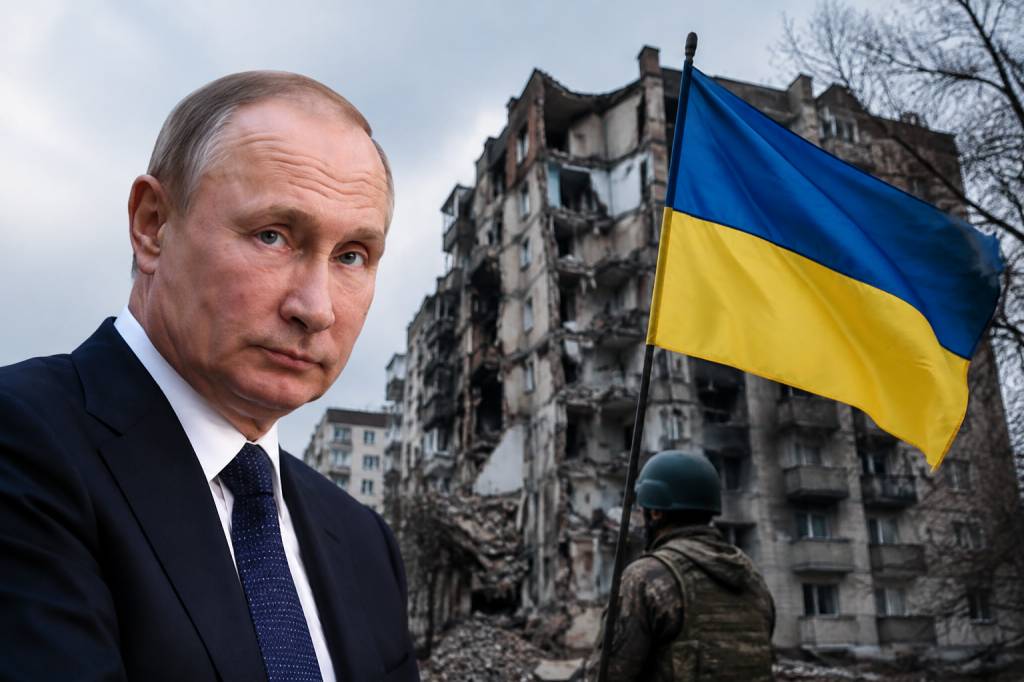
10 reasons why Russia invaded Ukraine and what it means for American consumers
Why Russia Invaded Ukraine: 10 Reasons and What the War Means for American Consumers
Russia’s full-scale invasion of Ukraine began on February 24, 2022, but the conflict did not start there. Russia seized Crimea and backed separatist forces in eastern Ukraine in 2014. The larger war grew from that unresolved conflict, a long dispute over Ukraine’s political direction, and Moscow’s attempt to redefine the security order in Europe.
For American consumers, this is not only a foreign-policy story. The war has affected gasoline prices, grocery bills, shipping routes, technology supply chains, travel, defense spending and the price of everyday goods. It has also created a confusing market for donations, collectibles and “investment” products connected to the conflict.
No single explanation accounts for Russia’s decision. The following ten factors provide a clearer map of the political, historical and economic forces involved, followed by practical information for U.S. households.
1. The Kremlin’s ambition to restore Russian influence
Russian President Vladimir Putin has repeatedly described the collapse of the Soviet Union as a major geopolitical disaster. His government has argued that Russia should retain a privileged sphere of influence over former Soviet republics and neighboring states.
Ukraine is central to that ambition. It is large, strategically located, historically important to Russian identity and connected to the Black Sea. Control over Ukrainian territory also offers access to ports, agricultural land, industrial regions and military corridors.
From Moscow’s perspective, Ukraine is not treated as an ordinary neighboring country. The Kremlin has often portrayed it as part of Russia’s historical and cultural space. That view conflicts directly with Ukraine’s sovereignty and with the modern principle that each country chooses its own government and alliances.
2. Ukraine’s shift toward Europe and the West
Ukraine’s political direction changed significantly after the 2013–2014 Euromaidan protests. Demonstrators opposed then-President Viktor Yanukovych’s decision to delay an agreement with the European Union. The protests led to his removal, followed by a stronger Ukrainian push toward European institutions.
Ukraine later deepened cooperation with the European Union and NATO, although it was not a NATO member when Russia invaded. Many Ukrainians saw closer relations with Europe as a path toward stronger institutions, trade opportunities and independence from Moscow.
The Kremlin viewed that shift as a strategic loss. Russian officials feared that a successful, democratic and Western-oriented Ukraine could weaken Russia’s political influence beyond its borders.
3. NATO expansion and Russia’s security claims
Russia has long opposed NATO expansion into Central and Eastern Europe. Several countries that once belonged to the Soviet sphere joined the alliance after the Cold War, including Poland, Romania and the Baltic states.
Moscow argued that NATO’s movement eastward created a direct security threat. In December 2021, Russia demanded written guarantees that NATO would stop expanding and that military activity near Russia would be restricted.
The United States and NATO rejected the idea that Russia could veto the alliances of independent countries. They also argued that NATO is a defensive organization and that countries such as Ukraine sought closer ties partly because they feared Russian pressure.
This disagreement was real, but it does not legally justify an invasion. Security concerns can explain a government’s stated reasoning without excusing its actions.
4. The Kremlin’s rejection of full Ukrainian independence
Putin has questioned aspects of Ukraine’s national history and has argued that Russians and Ukrainians form a single historical community. In a 2021 essay, he described Russians and Ukrainians as one people and challenged the idea that Ukraine has always existed as a fully separate political nation.
Ukrainian leaders and many historians strongly reject that interpretation. Ukraine has its own language, political traditions, cultural identity and national institutions. Its population includes people who speak Ukrainian, Russian and other languages, but language does not determine loyalty to Moscow.
The invasion therefore involved more than territory. It reflected a struggle over whether Ukraine would exist as an independent national project or remain within Russia’s political orbit.
5. The unresolved Donbas conflict
After Russia annexed Crimea in 2014, Russian-backed separatists seized parts of Donetsk and Luhansk in eastern Ukraine. The resulting conflict killed thousands before the 2022 invasion, even though the Minsk agreements attempted to establish a political settlement and ceasefire.
In February 2022, Russia recognized the self-proclaimed Donetsk and Luhansk “people’s republics” as independent. It then used the claim that Russian speakers in those areas needed protection as part of its justification for military action.
International observers and the Ukrainian government disputed Moscow’s narrative. The conflict was not simply a spontaneous civil war. Russian military, political and financial support played a central role in sustaining the separatist administrations.
6. Domestic political incentives in Russia
Foreign conflicts can also serve domestic political purposes. The Russian government has used nationalist messaging, state-controlled media and wartime censorship to present the country as surrounded by hostile powers.
A confrontation with the West can strengthen the Kremlin’s claim that strong centralized leadership is necessary. It can also shift public attention away from economic stagnation, corruption and restrictions on political opposition.
This does not mean every Russian citizen supported the invasion. Many Russians protested, left the country or expressed opposition despite legal and personal risks. It means that the conflict was presented domestically as a defense of national survival rather than as a war of expansion.
7. Strategic value of Ukraine’s geography
Ukraine occupies a critical position between Russia and the European Union. The country also borders the Black Sea, where Russia maintains the naval base at Sevastopol in Crimea.
Control of Crimea gives Russia a major military advantage in the Black Sea. Southern Ukrainian territory also connects Crimea to Russian-controlled areas in the Donbas, creating what military analysts often describe as a land corridor.
Ukraine’s geography matters economically as well. Before the war, it was a major exporter of wheat, corn, sunflower oil and other agricultural products. Its ports were essential to international food trade, particularly for countries in the Middle East and Africa.
8. Economic and industrial interests
Ukraine contains valuable agricultural land and industrial resources. It has deposits of iron ore, titanium, manganese, graphite and other minerals used in manufacturing and technology. The country also plays a role in the production of specialized industrial materials.
Russia’s interest in Ukraine cannot be reduced to a search for resources, but economic geography is part of the picture. Control over territory can influence ports, pipelines, rail networks, mines, factories and agricultural exports.
The war has made these resources more expensive or more difficult to move. It has also encouraged the United States and European countries to reconsider dependence on concentrated suppliers for energy, minerals and industrial components.
9. Miscalculation about Ukrainian resistance
One of the most important factors was likely a mistaken assumption that Ukraine’s government would collapse quickly. Russian forces initially advanced toward Kyiv, while the Kremlin appeared to expect a short operation and limited Western resistance.
Instead, Ukrainian forces resisted, the government remained in place and millions of civilians supported the defense effort. The United States and European allies provided weapons, intelligence, financial assistance and humanitarian support.
The failed attempt to take Kyiv transformed the war into a prolonged conflict. That changed the consumer impact as well: the longer the war continues, the more likely it is to influence energy markets, public budgets, shipping costs and commodity prices.
10. The failure of diplomacy and deterrence
Diplomatic channels remained active before the invasion, but negotiations failed to resolve the central disputes over Ukraine’s sovereignty, NATO, the Donbas and military deployments.
The United States and its allies warned Russia that an invasion would trigger severe sanctions. Those warnings did not deter the Kremlin. Russia may have calculated that Europe’s dependence on Russian energy would limit the Western response, that Ukraine would fall quickly or that political divisions would weaken allied cooperation.
Those calculations proved incorrect. Western governments imposed sanctions, reduced energy dependence and expanded military support for Ukraine. The result has been a long and expensive conflict with consequences far beyond Eastern Europe.
How the war affects U.S. household budgets
American consumers do not buy most goods directly from Russia or Ukraine, but global markets connect the conflict to local prices. The effect varies by product and by time.
- Gasoline and heating: Russia has historically been a major energy producer. Sanctions, export restrictions, production decisions and market uncertainty can push oil and gas prices higher. U.S. fuel prices are also influenced by domestic production, refinery capacity, seasonal demand and global consumption.
- Food: Ukraine and Russia are major agricultural exporters. Disruptions to grain shipments, fertilizer supplies and Black Sea shipping can raise costs for wheat, corn, cooking oil, livestock feed and packaged foods.
- Fertilizer: Higher fertilizer prices can increase farming costs, which may eventually appear in grocery prices. This effect is not limited to bread or cereal; it can influence meat, dairy and produce through farm expenses.
- Shipping and insurance: Rerouted cargo, security risks and higher insurance costs can make international transportation more expensive. Retailers may pass some of those costs to shoppers.
- Metals and technology: Russia and Ukraine have supplied materials used in steelmaking, batteries, aerospace and electronics. Shortages can affect manufacturers even when the final product is assembled elsewhere.
What shoppers should do before blaming the war for every price increase
The war is one factor, not a universal explanation. Inflation also reflects interest rates, labor costs, weather, energy demand, supply-chain bottlenecks and business pricing decisions.
When comparing prices, check several retailers and look at the unit cost rather than the package price. A smaller package may appear cheaper while costing more per ounce. For gasoline, compare local stations and avoid making large purchases based on a single news headline. Oil markets can move quickly in both directions.
For electronics and appliances, focus on warranty coverage, repairability and total ownership cost. A product that uses a scarce component may be delayed or priced higher, but paying a premium for a recognizable brand does not automatically guarantee better performance.
Energy independence does not mean isolation
The United States produces substantial amounts of oil and natural gas, but it remains connected to global energy markets. American producers can sell into international markets, and U.S. consumers can be affected by global prices even when domestic production is strong.
This is why “energy independence” is often misunderstood. Producing more energy can improve resilience, but it does not completely shield households from worldwide disruptions. Consumers should treat claims promising total protection from international events with caution.
Be careful with war-related donations and collectibles
The conflict has generated legitimate humanitarian appeals, but it has also created opportunities for scams. Before donating, verify the organization through independent watchdogs, inspect the website address and avoid pressure tactics involving cryptocurrency or wire transfers.
War-related coins, stamps, posters and commemorative products may have emotional appeal. They are not automatically sound investments. Check whether an item is officially issued, whether it has a documented sales history and whether the seller clearly explains condition, shipping and returns.
As with any collectible, scarcity alone is not enough. Demand, authenticity, provenance and buyer protections matter more than dramatic marketing language.
A practical consumer checklist
- Compare unit prices before buying food, household products or fuel.
- Keep an emergency budget instead of reacting to every market headline.
- Review shipping times and return policies when ordering imported goods.
- Verify charities before donating money or personal information.
- Be skeptical of investment offers linked to war news or sudden shortages.
- Use official government and established news sources for sanctions and travel updates.
- Remember that a price increase can have several causes, not just one geopolitical event.
The key points for American consumers
Russia invaded Ukraine because of a combination of power politics, historical claims, opposition to Ukraine’s Western alignment, security disputes over NATO, strategic geography and domestic political incentives. The Kremlin also underestimated Ukrainian resistance and the willingness of the United States and its allies to respond.
For U.S. households, the most visible effects are linked to energy, food, shipping, industrial materials and public spending. The practical response is not panic buying or speculative investing. It is careful price comparison, stronger source checking and a clearer understanding of how global events reach the local checkout line.
The war’s human and political consequences remain centered in Ukraine. Its economic effects, however, are global—and American consumers are part of that connected system every time they fill a tank, buy groceries or order a product shipped across an ocean.