13 reasons why deleted scenes: what Netflix left out and why it matters
13 reasons why deleted scenes: what Netflix left out and why it matters
Search for “13 Reasons Why deleted scenes” and you will find fan discussions, episode guides and clips presented as missing footage. What is harder to find is an official, complete list from Netflix. The distinction matters: a scene omitted from the final cut is not automatically a deleted scene that viewers can watch, and a scene that changed after release is not necessarily footage removed before the premiere.
The series ran for four seasons, from 2017 to 2020, and generated intense debate about how it depicted suicide, sexual assault, bullying and trauma. Its cuts are therefore more than a trivia question. They offer a way to examine how the show shaped its story, how Netflix responded to criticism, and what viewers can—and cannot—know about material left out.
What counts as a deleted scene?
In the strictest sense, a deleted scene is footage filmed for an episode but excluded from the version released to viewers. It may be cut for pacing, clarity, tone or runtime. Some productions later publish such footage as a bonus feature; others do not.
Online discussions often use the term more loosely. They may describe a scene mentioned in a script, a moment in a trailer that is absent from the episode, an alternate edit, or a scene that fans believe must have happened between two events. Those are not all the same thing. Without an official clip or production source, it is not possible to verify what was filmed, how it was edited, or why it was left out.
For 13 Reasons Why, this means there is no reliable public catalogue that establishes every cut scene across all four seasons. Netflix’s behind-the-scenes material and cast interviews explain aspects of the production, but they do not amount to a comprehensive archive of unused footage. A responsible account has to separate documented changes from speculation.
The best-known change happened after the premiere
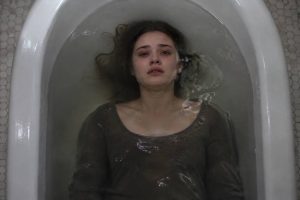
The most clearly documented cut is not a conventional deleted scene. It is a revision to the first-season finale. When the series originally premiered in 2017, the final episode included a graphic depiction of Hannah Baker’s suicide. In 2019, Netflix removed that sequence and replaced it with a less explicit version of the scene.
The decision came after sustained criticism from mental-health professionals, advocacy groups and viewers. Critics argued that the original image was unnecessarily graphic and could pose risks for vulnerable audiences. Netflix said it made the edit after consulting experts, including the American Foundation for Suicide Prevention. The revised episode retained the story’s outcome but no longer showed the act in the same detail.
That timing is important. The sequence was part of the episode people first watched; it was not simply an extra scene that had never aired. Netflix changed an already released episode. Viewers who watched before the revision may remember a different version from viewers who started the series later.
It is also useful to be precise about what the edit did and did not change. Hannah’s death remained central to the plot. The scene’s explicit visual presentation changed. That is a meaningful distinction: the story still addressed suicide, but the platform altered how directly the camera showed it.
Why the edit mattered beyond one episode
The revision raised questions about responsibility in streaming television. Unlike a theatrical film with a fixed release, a streaming episode can be altered after it has reached a global audience. A platform can respond to new advice or criticism, but the change also creates multiple versions of the same work.
For a drama built around testimony, memory and consequences, presentation is part of the argument. The original finale asked viewers to confront a graphic image. The revised version placed more emphasis on the discovery and aftermath rather than the act itself. Neither choice removes the subject from the story, but each guides the audience differently.
The edit also became part of the series’ public history. It showed that criticism could lead to a concrete production change, while leaving a harder question unresolved: how should a show portray painful realities without turning them into spectacle? There is no single answer that satisfies every viewer. The change is evidence of a decision, not proof that all concerns about the series were settled.
What viewers often mistake for deleted footage
Several kinds of material can look like a “missing scene” online, even when the evidence does not support that label. Before sharing a clip or treating a fan post as production history, check what it actually shows.
-
Trailers and promotional edits: A trailer may use a shot that does not appear in the final episode. It could come from an alternate take, a shortened edit or footage created specifically for promotion. Its absence does not prove a full scene was cut.
-
Recaps and memory: The series moves between present-day events, flashbacks and different characters’ accounts. Viewers can remember a moment as a complete scene when it was actually summarized or implied elsewhere.
-
Fan-made compilations: Videos labelled “all deleted scenes” do not become official simply because the title says so. Look for a studio or platform release, a verifiable bonus feature, or a credible interview confirming the material.
-
Post-release edits: The revised finale is a real change, but it is better described as a re-edit than as a scene that Netflix withheld from the original release.
This may sound like a narrow distinction. It is not. Treating an unverified clip as fact can turn a plausible guess into a false claim about what actors filmed or what producers intended.
Why scenes are cut in the first place
Television scenes are removed for ordinary production reasons as well as sensitive content. An episode may need a tighter pace, a clearer transition or a more focused point of view. A scene can repeat information the audience already understands, interrupt a character’s momentum, or make a later reveal less effective.
On 13 Reasons Why, those decisions carry extra weight because the story deals with adolescent vulnerability and serious harm. A scene can change how a viewer interprets a character’s responsibility, how much context is given to an act of violence, or whether a painful event is shown directly or described through its consequences.
That does not mean every omission was motivated by controversy. Without a production note or interview, assigning a specific reason to a particular missing scene is guesswork. “Netflix cut it because it was too disturbing” may sound plausible, but plausibility is not evidence. The strongest claims are the ones supported by an episode version, an official statement or a named participant speaking on the record.
Deleted scenes and the show’s changing approach
The series itself changed over time. Its first season adapts Jay Asher’s 2007 novel, while later seasons extend the story beyond the book. As the narrative expands, the show takes on more characters, conflicts and consequences. That shift makes editing especially important: scenes can be trimmed not only for length but also to keep a crowded plot understandable.
The show’s most debated choices often involved what it made visible. The 2019 edit of the finale is the clearest example of a platform revisiting that choice. It does not tell us what other scenes were cut, nor does it confirm fan theories about alternate storylines. It does show that the final version of a television episode is not always permanent.
For viewers, deleted material can be appealing because it promises a fuller account: one more conversation, another clue, or extra context for a difficult character. But more footage does not automatically mean a better or more responsible story. Sometimes an omission sharpens the episode. Sometimes it removes context. The effect depends on the scene, and the public record may not provide enough information to judge.
How to check a claim about a missing scene
If a post claims that Netflix removed a particular moment, use a simple verification checklist before accepting it:
-
Identify the version: Is the claim about the original 2017 finale, the later revised episode, or another season?
-
Find the source: Does the footage come from Netflix, an official home-video release, or a documented interview?
-
Check the wording: Does the source call it a deleted scene, an alternate take, a trailer shot or a later edit?
-
Separate fact from explanation: Even if a scene was cut, the reason may not be public. Avoid treating a fan theory about the motive as confirmed production history.
This approach is particularly useful with a show whose subject matter invites strong reactions. The debate over its choices is important, but it is stronger when it rests on what can be verified rather than on a collection of anonymous captions.
What the missing footage can—and cannot—tell us
Deleted scenes can reveal how a story was assembled, but they rarely provide a complete map of the creators’ intentions. A cut exchange might clarify a relationship; an alternate take might change a performance’s tone. Yet without the surrounding episode and production context, a short clip can be misleading.
In the case of 13 Reasons Why, the most consequential evidence is public and specific: Netflix revised the graphic scene in the first-season finale in 2019 after criticism and consultation with experts. Claims about a larger body of hidden scenes need stronger documentation than fan posts or screenshots.
The practical takeaway is straightforward: the series has a documented post-release edit, but there is no dependable public inventory of every deleted scene. The difference between an omitted scene, a promotional shot and a revised episode matters. And when the subject is as serious as this show’s, careful sourcing matters just as much as curiosity.